
Breast Augmentation
Expert breast enlargement surgery at Cadogan Clinic, Chelsea and Shirley Oaks Hospital, Surrey. Free initial consultations available.
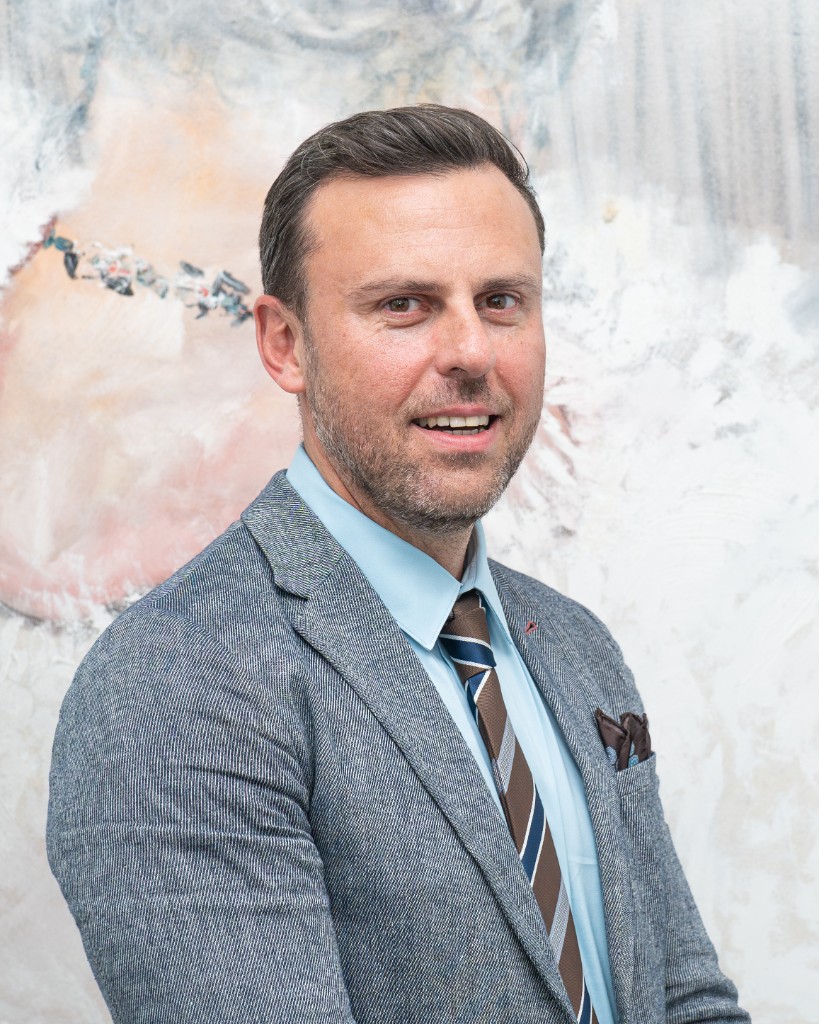
Mr Sarakbi believes breast augmentation should achieve results that look and feel entirely natural — complementing your existing anatomy rather than overpowering it. His surgical planning is meticulous: implant type, size, profile and placement are personalised to your body and goals, never selected from a standard menu. Over 800 augmentations performed.
Mr Will Sarakbi — Consultant Oncoplastic Breast Surgeon View breast augmentation results →About breast augmentation
Breast augmentation (enlargement) is one of the most commonly performed cosmetic procedures worldwide. It uses breast implants — or in some cases fat transfer from your own body — to increase the size, improve the shape and enhance the symmetry of the breasts.
Mr Sarakbi has performed over 800 breast augmentations and brings a breadth of surgical expertise that includes both aesthetic and oncoplastic training. He takes a meticulous, personalised approach — choosing implants and techniques based on your individual anatomy, lifestyle and goals.
Consultations and surgery are available at Cadogan Clinic, Chelsea and Shirley Oaks Hospital, Surrey. Free initial consultations are offered to patients considering augmentation.
Implant options
Modern breast implants are made with a cohesive silicone gel that maintains its shape if the shell is damaged. They come in a range of sizes, profiles and shapes:
- Round implants — versatile, give natural-looking fullness in the upper breast, most commonly used
- Anatomical (teardrop) implants — mimic the natural breast contour, greater fullness in the lower pole
- High, medium or low profile — projection is tailored to the width of your chest wall
Implant size and type are selected together at consultation, often using "sizers" or digital imaging to help visualise the expected result.
Surgical technique
The implant is usually placed through a small incision in the inframammary fold (the crease beneath the breast). It can be placed above or below the pectoralis major muscle — a decision based on your anatomy and the desired result.
In selected patients, implant positioning may be planned as subfascial, submuscular or dual-plane to optimise upper-pole contour, cleavage and long-term stability. Incisions are typically hidden in the inframammary fold and are usually short.
Surgery is performed under general anaesthetic and takes approximately 60–90 minutes. Most patients go home on the same day or the following morning.
You will usually go home in a supportive post-operative garment with oral pain relief and antibiotics where indicated. In straightforward primary augmentation, drains are not routinely required.
Recovery
Most patients return to desk work within 1–2 weeks. Physical exercise and lifting should be avoided for 6 weeks. Support bras are worn initially. Swelling and firmness gradually settle over 3–6 months as the implants soften and settle into position.
Augmentation Clinical Guide
If you would like a deeper understanding of planning, recovery and long-term implant care, this section summarises the key points discussed during consultation.
How implant placement is chosen
Implant pocket selection is personalised to your anatomy, tissue thickness, skin quality and goals. Options include subglandular (in front of muscle), subfascial, subpectoral (behind muscle), and dual-plane variants where the upper implant is muscle-covered and the lower pole sits behind breast tissue. In thinner patients, muscle coverage often improves upper-pole softness and reduces edge visibility.
Realistic expectations
- Augmentation increases volume but does not guarantee perfect symmetry.
- Natural chest wall shape, breast spacing and nipple position still influence final appearance.
- Where droop is significant, augmentation alone may not be enough and an uplift may be advised.
- Early firmness and a high implant position are common and usually soften/settle over time.
Risks and complications
As with all surgery, risks include bleeding, infection, delayed healing and scarring. Implant-specific risks include capsular contracture, implant malposition, asymmetry, rippling, implant rupture and the potential need for revision surgery. These are discussed in detail with consent tailored to your individual risk profile.
Long-term implant care
Modern implants are durable but not lifetime devices. Some patients never need replacement, while others require revision because of capsular change, rupture, size preference or tissue changes over time. Ongoing self-awareness, routine clinical review when indicated, and prompt assessment of new symptoms are important.
For practical day-to-day preparation and recovery instructions, see the Recovery Guides. For anaesthetic planning and fasting advice, see Anaesthesia Information.
Free initial consultations available. Book your appointment today.
Book a Consultation- Guide price
- From £6,500 (all-inclusive)
- Consultation
- Complimentary
- Anaesthetic
- General
- Duration
- 60–90 minutes
- Hospital stay
- Day case or 1 night
- Return to work
- 1–2 weeks (desk)
- Exercise
- 6 weeks
- Final result
- 3–6 months
★★★★★"From my first consultation I knew I was in the right hands. Mr Sarakbi was thorough, patient and the results have exceeded my expectations."
Frequently asked questions about breast augmentation
Mr Sarakbi uses high-quality, CE-marked cohesive silicone gel implants from reputable manufacturers. Implant type, size, profile and placement are discussed and agreed at consultation based on your anatomy and desired outcome.
Modern implants are designed to be long-lasting and many patients have their implants for 15–20 years or more. They are not guaranteed for life, and routine monitoring is recommended. Mr Sarakbi will advise on long-term expectations at your consultation.
In most cases, breast augmentation does not affect the ability to breastfeed. The choice of incision and implant placement can influence this, and Mr Sarakbi will discuss these considerations with you if breastfeeding is a priority.
As with all surgery, risks include bleeding, infection, scarring and anaesthetic complications. Specific risks include capsular contracture (scar tissue around the implant causing firmness), implant rupture, and asymmetry. These are discussed in full at your consultation. Mr Sarakbi operates at accredited facilities with full aftercare.
Submuscular placement (under the pectoral muscle) gives a more natural appearance and lower rates of capsular contracture, and is generally recommended for women with less natural breast tissue. Subglandular placement (above the muscle) can give more uplift and is suitable for women with adequate breast tissue coverage.
Yes — augmentation mastopexy (combined augmentation and uplift) is performed where the breast needs both increased volume and lifting. Mr Sarakbi will advise whether a combined procedure is appropriate for you.
About Breast Augmentation
Mr Sarakbi explains what you need to know — in his own words.
Post-operative garment and recovery guidance is available in our dedicated Recovery Guides section.
View Recovery GuidesBook a free consultation
Discuss your goals with Mr Sarakbi at Cadogan Clinic, Chelsea. No obligation, no pressure.